

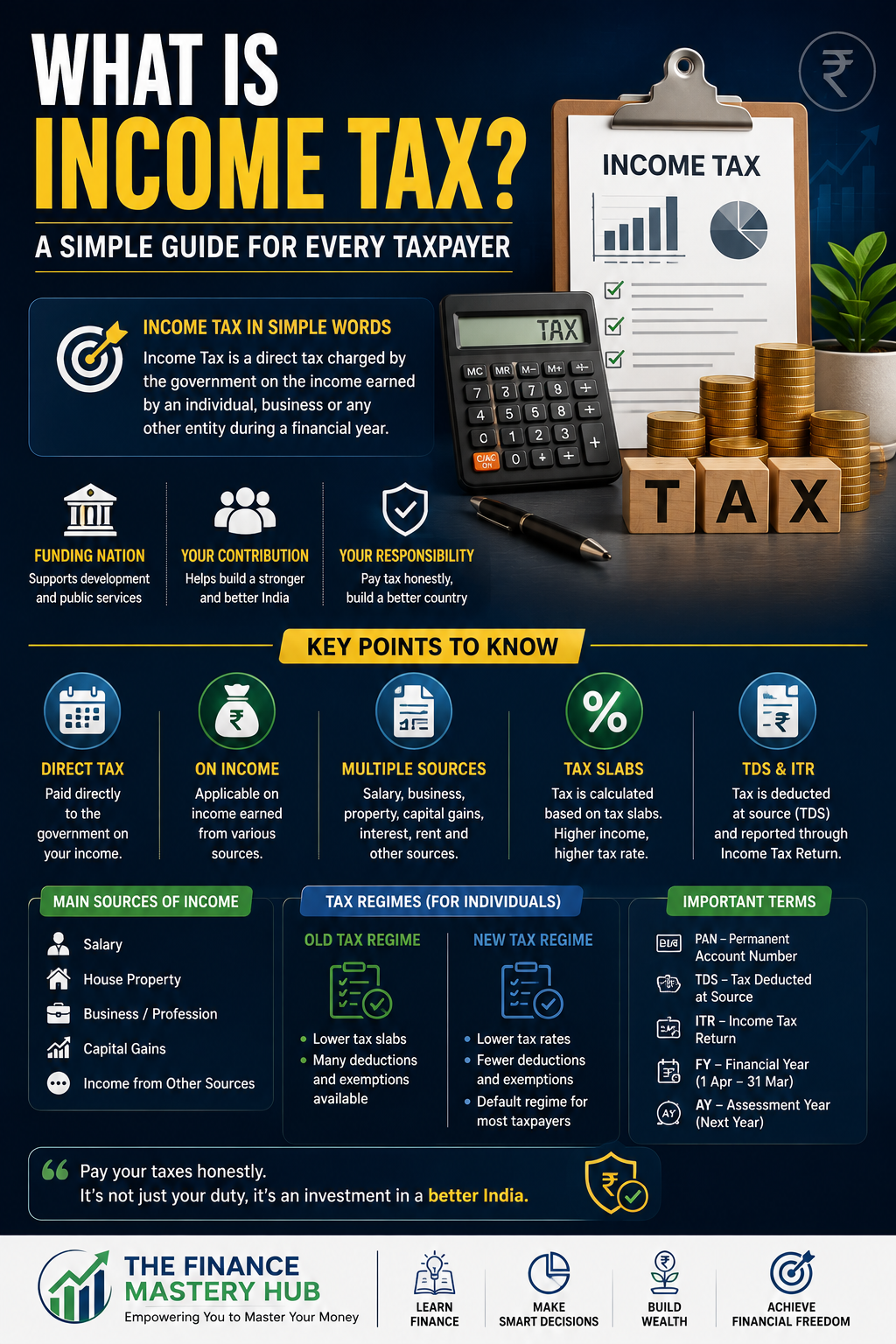
What Is Income Tax in India? A Simple Guide for Every Taxpayer
You earn a salary, receive interest from your bank account, earn income from a business, or make money from investments. But when does the government ask you to pay tax on that income? What exactly is Income Tax, and how does it work?
Income Tax is one of the most important taxes that individuals and businesses need to understand.
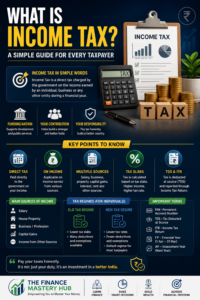
In simple words, Income Tax is a direct tax charged by the government on taxable income earned by a person or entity during a financial year.
Unlike GST, which is generally collected when you purchase taxable goods or services, Income Tax is directly related to your income.
What Is Income Tax?
Income Tax is a tax imposed on the income earned by an individual, business or other taxable entity under India’s income-tax laws.
For an individual, income can come from different sources.
For example:
- Salary
- Business or profession
- Interest
- Rent
- Capital gains from investments
- Certain other sources
The government does not simply look at the money credited to your bank account and automatically call all of it taxable income.
Income Tax is calculated according to the applicable tax rules, including exemptions, deductions, income classification, tax regime and other provisions.
Why Do We Pay Income Tax?
The government collects taxes to finance public expenditure and provide services and infrastructure.
Tax revenue can contribute to areas such as:
- Roads and infrastructure
- Education
- Healthcare
- Defence
- Public administration
- Government schemes
- Public services
- Development programmes
Therefore, Income Tax is an important source of government revenue.
In simple terms:
People and businesses earn income → applicable taxes are collected → government uses tax revenue for public expenditure and services.
Who Has to Pay Income Tax?
Not everyone earning money necessarily pays Income Tax.
Whether you have a tax liability depends on factors such as:
- Your total income
- Type and source of income
- Applicable deductions and exemptions
- Age and residential status where relevant
- Tax regime selected, where applicable
- Special provisions of the Income Tax Act
The tax system has different rules for different categories of taxpayers.
What Are the Main Sources of Income?
For income-tax purposes, income is generally classified into specific heads.
The major heads include:
1. Income From Salary
This includes income received from employment, such as salary, allowances and certain taxable benefits.
For salaried employees, the employer may deduct Tax Deducted at Source (TDS) from salary during the year when applicable.
2. Income From House Property
Income related to ownership of a house property can be taxable under the applicable provisions.
Rental income is a common example.
3. Profits and Gains From Business or Profession
If you operate a business or work as a professional, your taxable income can be calculated under the applicable business or professional-income provisions.
4. Capital Gains
Profit from the transfer or sale of certain capital assets can be taxable as capital gains.
Examples can include certain shares, mutual funds, property and other investments.
The tax treatment depends on the type of asset, holding period, transaction and applicable law.
5. Income From Other Sources
Certain income that does not fall under the other specific heads can be taxed under Income From Other Sources.
Examples can include certain interest income, dividends and other specified income.
What Is a Financial Year?
A Financial Year (FY) is the period during which income is earned and financial transactions are recorded for tax purposes.
In India, the financial year runs from:
1 April to 31 March.
For example:
1 April 2025 to 31 March 2026 = FY 2025-26
Your income earned during the financial year is generally considered for determining your tax liability for that year.
What Is an Assessment Year?
The Assessment Year (AY) is the year following the financial year in which the income is assessed and the relevant income-tax return is filed.
For example:
FY 2025-26 → AY 2026-27
This distinction is important when filing your Income Tax Return.
A simple way to remember it is:
Financial Year = When you earn the income
Assessment Year = The following year in which that income is assessed/reported
What Is an Income Tax Slab?
For individuals, Income Tax is generally calculated using tax slabs.
A tax slab means different portions of taxable income can be taxed at different rates.
This is important because being in a particular tax slab does not mean your entire income is automatically taxed at that highest rate.
Only the portion falling within each applicable slab is taxed at the corresponding rate.
What Is the New Tax Regime?
India currently provides taxpayers with different tax-regime options depending on eligibility and circumstances.
The new tax regime generally provides lower slab rates but has fewer deductions and exemptions compared with the old regime.
The government has made the new tax regime the default regime for individual taxpayers, while eligible taxpayers can generally choose the old regime subject to the applicable rules.
The choice between regimes should be based on your income, deductions, investments and personal financial situation.
What Is the Old Tax Regime?
The old tax regime generally provides a wider range of deductions and exemptions but uses different tax slabs.
Common deductions that taxpayers may consider under the old regime can include eligible deductions related to:
- Certain investments
- Health insurance
- Home-loan interest
- Education loans
- Certain savings and expenses
The availability and limits of these deductions depend on the applicable provisions.
What Is TDS?
TDS stands for Tax Deducted at Source.
It means tax is deducted from certain types of payments before the recipient receives the money.
For example, an employer may deduct TDS from an employee’s salary when required.
TDS can also apply to certain interest, rent, professional fees and other payments depending on the applicable provisions.
The person or entity making the payment generally deposits the deducted tax with the government and reports it as required.
Does TDS Mean You Have Paid All Your Income Tax?
Not necessarily.
TDS is a method of collecting tax during the year.
Your final tax liability is determined based on your total taxable income and applicable tax provisions.
When you file your Income Tax Return, the tax already deducted through TDS can generally be considered against your final tax liability.
You may have:
Additional tax to pay
or
A refund due
depending on your final tax calculation.
What Is an Income Tax Return?
An Income Tax Return (ITR) is a form through which a taxpayer reports relevant income, deductions, taxes paid and other required information to the Income Tax Department.
Filing an ITR allows the government to determine whether:
- You have paid the correct amount of tax
- Additional tax is payable
- You are eligible for a refund
- Your reported income matches applicable information
Not every person has the same ITR filing requirements. The applicable form depends on factors such as income sources, residential status, income level and other circumstances.
What Is a Tax Refund?
Sometimes, the tax already paid by a taxpayer during the year can be higher than the final tax liability.
In such a situation, the taxpayer may become eligible for a tax refund, subject to the applicable rules and processing of the return.
For example, if ₹50,000 was deducted as TDS but your final tax liability is ₹35,000, the excess amount may generally be refundable, subject to the Income Tax Department’s processing.
What Are Tax Deductions?
A tax deduction is an amount that may be allowed to reduce taxable income under specific provisions of the Income Tax Act.
However, deductions are not automatically available to everyone.
Their availability depends on the applicable tax regime and specific conditions.
This is one of the major differences taxpayers should understand when comparing the old and new tax regimes.
Is All Income Taxable?
No.
The taxability of income depends on the nature of the income and the applicable provisions.
Some income may be exempt, some may receive specific deductions, and some may be taxed under special rates.
Therefore:
Income received ≠ automatically taxable income
The correct tax calculation requires understanding the nature of the income and the applicable rules.
Income Tax vs GST
This is one of the easiest ways to understand the difference between two major taxes.
Income Tax
Direct tax
It is based on taxable income.
Example:
You earn salary or business income.
GST
Indirect tax
It generally applies to taxable supplies of goods and services.
Example:
You purchase a taxable product or service.
So:
Income Tax → Tax on taxable income
GST → Tax on taxable supply of goods and services
Why Is Income Tax Important for Normal People?
Income Tax is not only relevant to wealthy individuals.
It can affect salaried employees, freelancers, professionals, business owners, investors, landlords and many other taxpayers.
Understanding Income Tax can help you:
- Plan your finances
- Understand your salary structure
- Check your Form 16
- Understand TDS
- File your ITR correctly
- Claim eligible deductions
- Understand tax refunds
- Plan investments more effectively
- Avoid unnecessary tax-related problems
Common Income Tax Mistakes
Many taxpayers make mistakes because they do not understand the basic rules.
Some common mistakes include:
Ignoring income from other sources
Interest, dividends and other income may have tax implications.
Not checking Form 26AS and AIS
These documents can help taxpayers review tax-related information reported against their PAN.
Assuming TDS means everything is settled
TDS is only one method of tax collection.
Choosing a tax regime without comparing the numbers
The better regime can depend on your individual circumstances.
Forgetting about capital gains
Selling certain investments or property can create taxable capital gains.
Waiting until the last moment to organize documents
Keeping records throughout the year makes tax filing much easier.
What Is PAN?
PAN stands for Permanent Account Number.
It is a unique identification number issued by the Income Tax Department.
PAN is widely used for tax-related transactions, income-tax returns, financial transactions and other specified purposes.
It helps the tax authorities link financial and tax information to the taxpayer.
What Is Form 16?
For salaried employees, Form 16 is an important tax document provided by the employer when applicable.
It contains information about salary income and TDS deducted by the employer.
Employees can use Form 16 while preparing their Income Tax Return.
However, taxpayers should not rely only on Form 16. They should also review other income and relevant tax information.
What Are AIS and Form 26AS?
The Annual Information Statement (AIS) provides taxpayers with information about certain financial transactions and tax-related information reported to the Income Tax Department.
Form 26AS is another important tax statement showing specified tax-related information, including TDS/TCS and other available details.
Taxpayers should review these records and reconcile them with their own financial records before filing their return.
The Most Important Thing to Understand
Income Tax is not simply:
“I earned money, so I pay a percentage of it as tax.”
The actual calculation can involve:
Total Income
minus applicable exemptions/deductions
equals relevant taxable income
then applicable tax rates
plus applicable cess/surcharge
minus eligible tax already paid/TDS
equals the final tax payable or refund.
The exact calculation depends on the taxpayer’s circumstances and the applicable tax rules.
Key Points to Remember
Income Tax is a direct tax on taxable income.
India’s financial year runs from 1 April to 31 March.
Income can come from salary, business, property, investments and other sources.
Tax is calculated according to the applicable provisions and tax regime.
TDS is tax collected at source on specified payments.
TDS does not necessarily equal your final tax liability.
Eligible taxpayers may receive a refund if excess tax has been paid.
The old and new tax regimes have different rules, rates, deductions and exemptions.
ITR is used to report relevant income and tax information to the Income Tax Department.
Tax laws and rates can change, so taxpayers should always check the latest official rules.
Income Tax in Simple Words
If we explain Income Tax in one sentence:
Income Tax is a direct tax that the government charges on taxable income earned by individuals and other taxpayers according to the applicable tax laws.
You earn income.
The government determines how much of that income is taxable under the applicable rules.
You calculate your tax liability.
Tax may be collected during the year through mechanisms such as TDS or advance tax.
You report the required information through your Income Tax Return.
Finally, you either pay any remaining tax or receive a refund if eligible.
Final Thoughts
Understanding Income Tax does not require you to become a tax expert.
You simply need to understand the basic concepts:
What is income?
What is taxable income?
Which tax regime applies?
How much tax has already been paid?
Do you need to file an ITR?
Are you eligible for any deductions or exemptions?
The more you understand about Income Tax, the better you can plan your money.
Financial literacy is not only about earning more, saving more and investing wisely. It is also about understanding how taxes affect the money you earn and keep.
This article is for general educational purposes only and does not constitute professional tax advice. Income-tax rules, tax slabs, deductions and filing requirements can change. Always verify the latest provisions on the official Income Tax Department website or consult a qualified tax professional for your specific situation.